 how-to
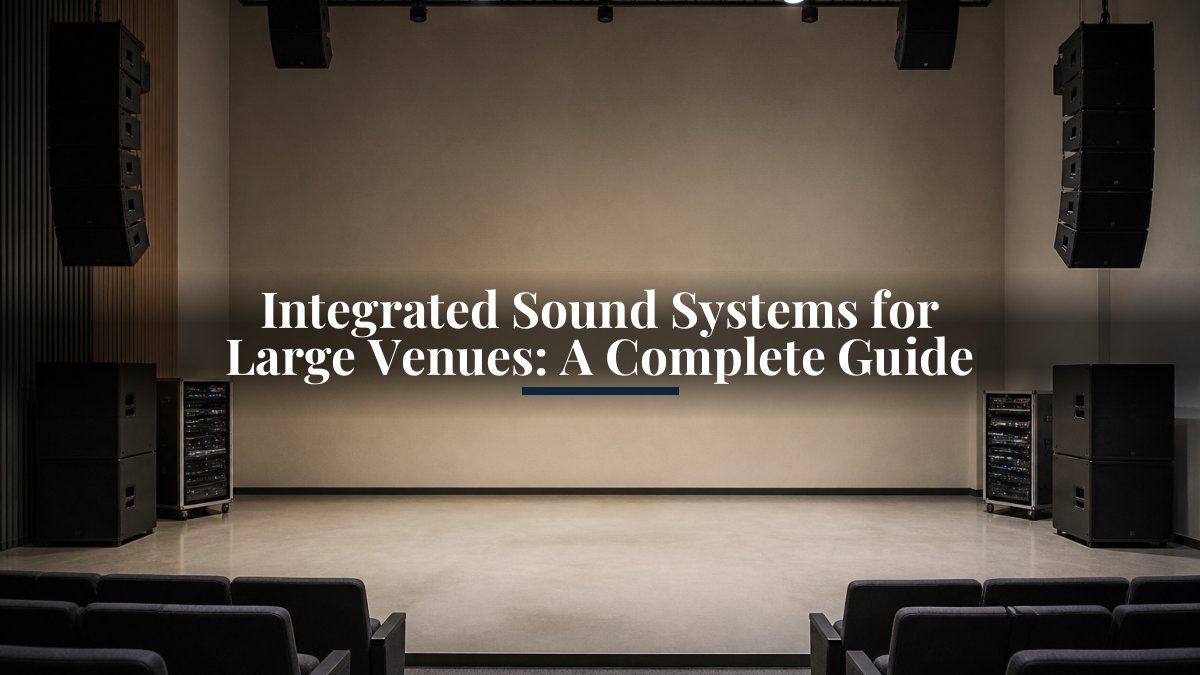
Integrated Sound Systems for Large Venues: A Complete Guide
Table of Contents
- Understanding Integrated Sound Systems for Large Venues
- Large Venue Sound System Design: Planning for Your Space
- Line Array Speakers for Large Venues: Ensuring Even Coverage
- Wireless Microphone Systems for Venues: Connectivity and Reliability
- Power Requirements and Amplification: Avoiding Distortion
- Commercial Audio System Installation: From Setup to Commissioning
- Common Installation Mistakes to Avoid
- Frequently Asked Questions
Last Updated: October 15, 2026
Understanding Integrated Sound Systems for Large Venues
An integrated sound system is a coordinated network of audio equipment, speakers, microphones, amplifiers, and mixing consoles, designed to deliver clear, consistent sound throughout a large venue. Unlike standalone systems that handle one task, integrated sound systems connect all components so they work as a single unit. This approach ensures that whether someone sits in the front row or the back corner, they hear the same quality audio.
Large venues present unique acoustic challenges. A single speaker cannot cover a 10,000-seat auditorium evenly. Sound travels differently depending on distance, obstacles, and room shape. An integrated sound system solves this by strategically placing multiple speaker types, routing audio signals through a central mixing console, and tuning the entire setup to match the room's specific characteristics.
NewDay Tech helps churches and businesses design systems that deliver professional-grade audio without the complexity. The key is planning the system around your venue's layout and audience size from the start, not adding equipment piecemeal and hoping it works.
Large Venue Sound System Design: Planning for Your Space
Designing an integrated sound system begins with understanding your venue's physical dimensions and how many people it will serve. A 500-seat church requires a completely different approach than a 5,000-person conference hall. The goal is to match equipment power, speaker placement, and signal routing to your actual space.
Start by measuring your venue's length, width, and height. Note any architectural features that affect sound: high ceilings, hard reflective surfaces like tile or concrete, soft absorptive materials like carpet or curtains, and structural obstacles like columns or balconies. Each of these elements changes how sound travels and where it needs to be reinforced.
Assessing Venue Size and Audience Capacity
Your venue's size determines the scale of equipment needed. A 200-seat training room needs modest amplification. A 2,000-seat auditorium requires significantly more power and multiple speaker zones. Audience capacity also affects how you'll deploy microphones, a small meeting room might use one wireless mic, while a large conference needs multiple handheld and headset options.
Calculate your venue's total volume in cubic meters. A rough guideline: venues under 500 cubic meters typically need powered speakers or compact amplifier systems. Venues between 500 and 2,000 cubic meters usually require dedicated amplification and mid-sized speaker arrays. Venues above 2,000 cubic meters almost always need line array systems and professional-grade mixing consoles.
Calculating Coverage Area and Sound Distribution
Sound coverage means ensuring every seat receives adequate volume and clarity. A common mistake is assuming one speaker can cover the entire room. In reality, sound loses intensity as it travels farther from the source. At 10 meters away, sound is only one-quarter as loud as at 2.5 meters, even in ideal conditions.
Divide your venue into coverage zones. A rectangular conference room might need front, middle, and rear zones. A theater with a balcony needs separate speaker systems for the main floor and upper seating. Each zone gets its own speaker or speaker cluster, all fed the same audio signal from your mixing console. This distributed approach ensures even sound levels throughout the space.
Line Array Speakers for Large Venues: Ensuring Even Coverage
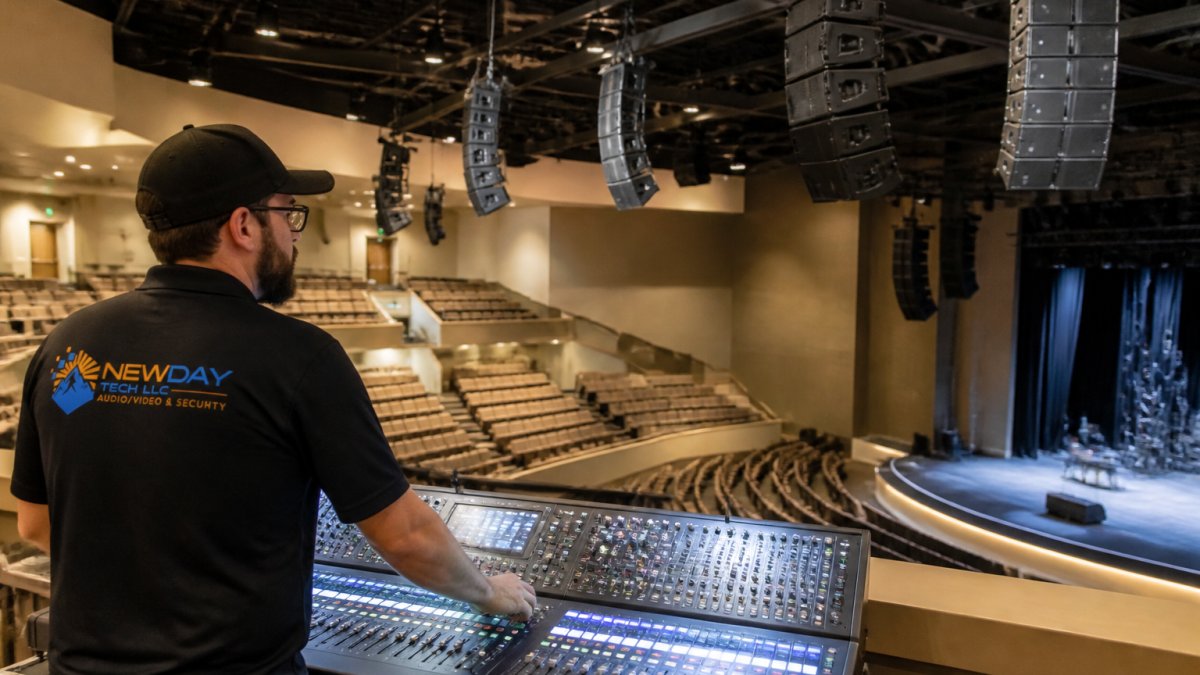
Line array speakers are the standard for large venues because they distribute sound evenly across long distances. Unlike traditional box speakers that project sound in a wide cone, line arrays stack multiple small speaker elements vertically, focusing sound in a controlled pattern. This design minimizes dead zones and reduces echo.
Line arrays excel in venues with long sight lines, think conference halls, concert venues, and large churches. They're mounted from the ceiling or rigging structures and angled to cover specific seating sections. A typical line array system for a 1,500-seat venue might use two or three array strings, each with 8-12 speaker elements.
The trade-off: line arrays cost more than traditional speakers and require professional installation and tuning. But for venues over 1,000 seats, they're the most cost-effective way to achieve consistent coverage. Smaller venues often use powered speakers or compact arrays, which are easier to install and adjust.
Wireless Microphone Systems for Venues: Connectivity and Reliability
Wireless microphones give speakers and presenters freedom to move while staying connected to your integrated sound system. For large venues, reliability matters more than convenience. A wireless mic that drops signal mid-presentation damages credibility and audience experience.
Choose wireless systems operating on licensed or coordinated frequencies to avoid interference. Digital wireless systems are more stable than analog but cost more. For a venue hosting multiple simultaneous events, you might need 8-12 wireless channels. A church with one pastor and occasional guest speakers might use 2-4 channels.
Frequency coordination is critical. If your venue sits near a broadcast tower or shares the spectrum with other wireless systems, interference is likely. Professional installers use spectrum analyzers to identify clear frequencies before deployment. This is one area where DIY installation often fails, people buy wireless mics without checking local frequency availability, then struggle with dropouts and dead zones.
Power Requirements and Amplification: Avoiding Distortion
Amplifier power is measured in watts. A 100-watt amp sounds loud in a small room but produces barely adequate volume in a large venue. The relationship between power and perceived loudness is logarithmic: doubling power adds only 3 decibels, which sounds like a modest increase to human ears.
These figures account for speaker efficiency and the distance sound must travel. Undersizing your amplifier creates distortion, the amp clips and compresses audio peaks, making speech sound harsh and music sound muddy.
Oversizing is less harmful but wastes money and generates excess heat. A properly sized amplifier runs at 60-80% of maximum output during normal operation, leaving headroom for peaks without distortion. This is where professional system design pays off: a consultant calculates your actual power needs based on speaker efficiency, venue acoustics, and expected sound levels.
Commercial Audio System Installation: From Setup to Commissioning
Installation is where many venues run into trouble. Buying the right equipment means nothing if it's installed incorrectly. Professional installation includes physical mounting, electrical wiring, signal routing, and acoustic tuning.
Signal Routing and Mixing Console Configuration
Your mixing console is the command center. Every microphone, playback device, and speaker connects through it. Signal routing determines which audio sources go to which speakers. A typical routing might send the main stage microphone to the main speaker system and an overflow room's speaker to a separate zone.
Configure your console with clear input and output assignments. Label every channel. Program scenes or presets for common configurations, one for presentations, one for music, one for live events. This reduces the chance of operator error during actual events.
Acoustic Treatment and Room-Specific Tuning
Even perfect equipment sounds bad in an acoustically untreated room. Hard surfaces reflect sound, creating echoes and phase cancellation. Soft surfaces absorb sound unevenly, creating dead zones where audio sounds muffled.
Acoustic treatment includes adding absorption panels, diffusers, or bass traps where needed. A professional acoustician uses measurement tools to identify problem frequencies and room modes. Tuning involves adjusting speaker levels, delays, and equalization so the system sounds natural throughout the venue.
Testing, Verification, and Ongoing Support
Before opening to the public, run comprehensive tests. Walk the entire venue with a sound level meter. Check that every seat receives adequate volume and clarity. Test all microphones, wireless systems, and backup equipment. Verify that the mixing console responds as expected.
Document your system configuration. Record which inputs feed which outputs, what the ideal mixing console settings are for different events, and how to troubleshoot common problems. This documentation becomes invaluable when staff needs to operate the system or when issues arise.
Common Installation Mistakes to Avoid
Undersizing amplification is the most common mistake. Teams buy speakers they like, then skimp on the amplifier to save money. The result is distortion and complaints about sound quality. Always size amplification based on speaker efficiency and venue size, not budget.
Another frequent error is poor speaker placement. Mounting speakers where they look good architecturally, rather than where they cover the audience, creates dead zones. Work with a designer to position speakers based on sight lines and coverage, even if it means less visible placement.
Inadequate acoustic treatment is also common. Teams install expensive speakers and amplification, then wonder why the room sounds echoey and unclear. A modest investment in absorption panels and professional tuning often improves perceived sound quality more than upgrading equipment.
Finally, neglecting wireless system frequency coordination causes preventable interference. Always have your frequencies coordinated before installation.
Designing and installing an integrated sound system for a large venue is complex, but the payoff is immediate: clear audio that reaches every seat, reliable wireless connectivity, and a professional experience for your audience. NewDay Tech specializes in designing these systems for churches, conference centers, and event venues across North Texas. Our team handles planning, equipment selection, professional installation, and ongoing support, ensuring your integrated sound system works reliably for years. Request a consultation to discuss your venue's audio needs and discover how we can simplify your technology integration.
Frequently Asked Questions
What equipment is needed for an integrated sound system in a large venue?
A complete integrated sound system requires powered speakers or amplifiers with passive speakers, a mixing console for signal control, wireless microphones, subwoofers for low-frequency support, and cables for signal routing. For large venues, line arrays distribute sound evenly across the audience. The specific equipment depends on venue size, audience capacity, and whether you need distributed audio for multiple zones. Professional installation ensures all components work together seamlessly.
How do you design even sound coverage for a large venue?
Start by measuring your venue dimensions and audience capacity. Use line arrays for main coverage and distributed speakers for fill areas. Calculate coverage zones based on speaker placement and frequency response. Conduct acoustic analysis to identify dead spots or excessive reflections. Position speakers to minimize overlap while ensuring no gaps in sound distribution. Test coverage with sound pressure level meters during commissioning to verify even audio levels throughout the venue.
What is the best sound system for a large hall or conference room?
For large halls, choose a system with line array speakers for even distribution, powered subwoofers for bass response, and a professional mixing console for signal control. Wireless microphone systems provide flexibility for presentations and events. The best system depends on your venue's acoustics, audience size, and primary use (lectures, performances, or events). Distributed audio systems work well for multi-room venues. Professional design and installation ensure speech intelligibility and audio clarity for all attendees.
How much does it cost to install an integrated sound system in a large venue?
Pricing depends on venue size, equipment quality, complexity of integration, and installation scope. Factors affecting cost include speaker type and quantity, amplification power, wireless microphone systems, acoustic treatment, and labor. A professional consultation provides an accurate quote based on your specific venue requirements and budget. NewDay Tech provides transparent pricing for equipment and installation services.